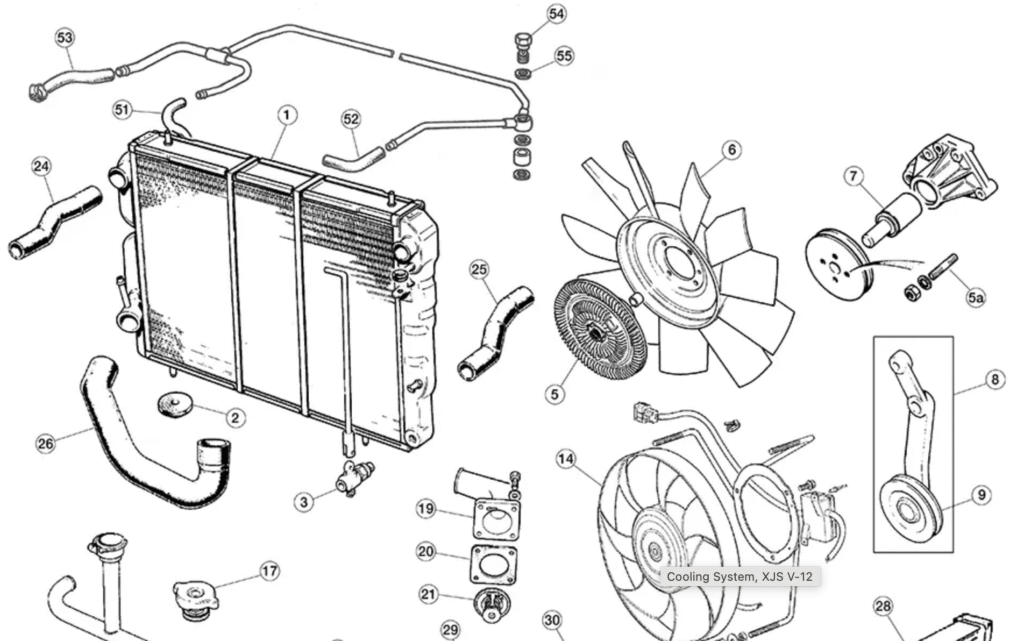
Understanding the XJ-S Cooling Philosophy
The Jaguar XJS was produced over more than two decades and fitted with two very different engine families: the AJ6 straight-six in 3.6- and later 4.0-litre form, and the long-serving V12 in 5.3- and later 6.0-litre form. While the cooling layouts differ in detail, the underlying philosophy is the same — manage heat effectively under load, not eliminate all visible temperature movement.
Unlike many modern cars, the Jaguar XJS does not attempt to disguise temperature changes. Its gauges reflect what is happening within the cooling system, and some movement of the needle is both expected and normal.
Why XJS Cooling Systems Are Often Misunderstood
Modern vehicles have trained drivers to expect a temperature gauge that rises to a midpoint and remains there indefinitely. The XJS predates that approa
Please log in to continue reading this article.